Top 10 Most Moving Moments From the Flight of Honor Welcome at Sarasota Bradenton Airport
Top 10 Most Moving Moments From the Flight of Honor Welcome at Sarasota Bradenton Airport
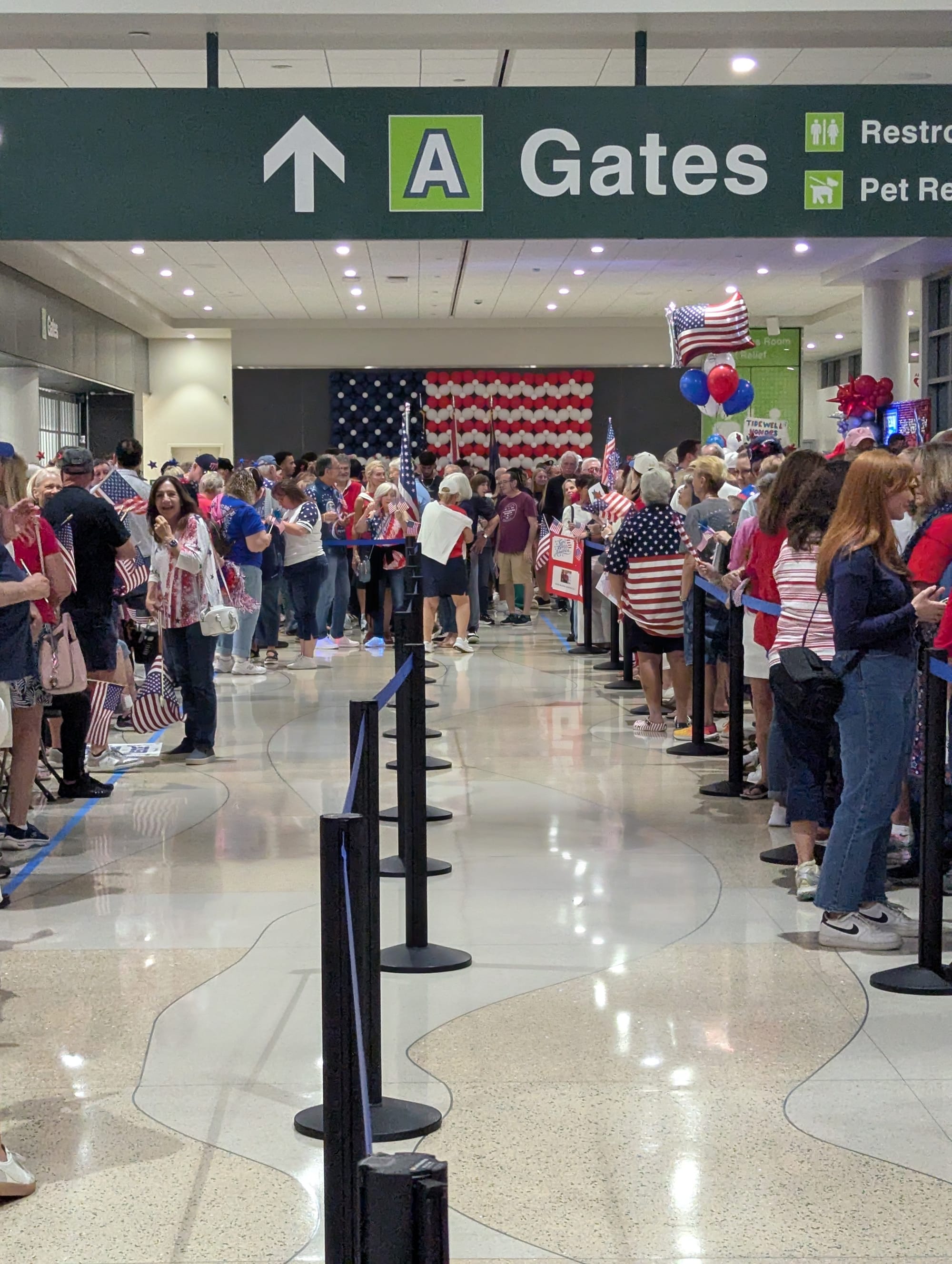
There are community events that feel important, and then there are moments that change the atmosphere in an entire building. A Flight of Honor welcome at Sarasota Bradenton Airport is the second kind. The terminal becomes a living thank you card, filled with hand made signs, uniforms, flags, music, and quiet tears. Strangers speak to each other like neighbors. Veterans who once avoided attention find themselves gently surrounded by gratitude that is impossible to ignore.
For Sarasota, these arrivals are more than a ceremony. They are a reminder that service, sacrifice, and citizenship are not abstract ideas. They have names and faces. They have families. They have stories that still shape our neighborhoods, our freedoms, and our responsibilities.
As a Woman's Club rooted in volunteer service, A-GFWC-Sarasota Club understands how powerful organized community action can be. A Flight of Honor welcome is built from hundreds of small volunteer choices, show up early, make a sign, clap until your hands ache, hold a door, offer a wheelchair, greet a caregiver, or simply stand in respectful silence. What follows are ten of the most moving moments people often witness during these welcomes at Sarasota Bradenton Airport, and why each one stays with you long after the last flag is folded.
1. The first glimpse of the veterans entering the terminal
There is a distinct instant when conversation stops and attention turns. You might hear it before you see it, a swell of applause rolling down the concourse. Then the first veterans come into view, often escorted and surrounded by volunteers, airport staff, and family members waiting at the edges. Many arrive in wheelchairs, not because they want special treatment, but because long travel days are hard on aging bodies. What makes this moment so moving is the contrast between the veteran’s humility and the community’s determination to honor them anyway.
Some veterans smile broadly, surprised by the size of the crowd. Others look down for a second, as if absorbing the weight of it. A few lift a hand in a small wave that looks almost like a salute. The applause is not just noise, it is a collective act of witness, an unspoken promise that their service is remembered here, right now, by people who did not live their war but benefit from their sacrifices.
How to honor this moment: Keep the walkway clear, clap steadily, and let veterans set the pace. A warm smile and a simple “Welcome home” often means more than a long speech.
What volunteers do best: Create calm in the crowd, offer directions, and quietly help families find a viewing spot without pushing or rushing anyone.
2. The honor corridor of flags, signs, and steady applause
The honor corridor is the emotional backbone of the welcome. Dozens, sometimes hundreds, of people line up on both sides of the path, holding American flags, service branch signs, and hand drawn posters. Children stand on tiptoe. Teenagers hold banners that read “Thank you for your service” in bright marker. Adults raise flags and clap, some with tears already forming. The veterans pass through the corridor at close range, close enough to make eye contact, close enough to feel the warmth of a human welcome rather than a distant salute.
What makes the corridor moving is its simple geometry. The veterans are centered, supported on both sides by gratitude. For some, it is the welcome they never received when they came home decades earlier. For others, it is a surprising recognition that their service still matters to people who never met them. You can see shoulders relax. You can see faces soften. In that corridor, the airport becomes a bridge between generations.
How to honor this moment: Hold your flag high but steady, avoid leaning into the walkway, and keep your words short and kind. The repeated chorus of “Thank you” is powerful when it is respectful and not demanding a response.
Tip for families: If you want a photo, take it from the side so you do not stop the flow. Let your veteran keep moving at a comfortable pace.
3. The unexpected reunion, a hug that erases decades
Not every reunion is planned. Sometimes a family member is waiting with a sign and the veteran knows. Other times, someone in the crowd recognizes a name, a face, a unit patch, or an old friend they have not seen in years. A veteran turns their head, eyes narrowing with disbelief, and then suddenly they are reaching out. The hug that follows is not theatrical. It is a full body recognition, the kind that briefly makes the rest of the airport disappear.
These reunions are moving because they reveal how war stories live inside families and friendships. A son may be seeing his father, not as the quiet man who never talked much about his youth, but as a young service member who carried responsibilities he did not fully understand. A spouse may be watching the veteran become, for a moment, someone they were before marriage and parenting and work. When tears appear, they are often a blend of joy and grief, relief that a friend is still here, and sadness for those who are not.
How to honor this moment: Give people space. Do not step in for photos without permission. Let the reunion remain theirs.
What volunteers can do: Quietly redirect foot traffic, and help keep the corridor open while families take a few seconds to reconnect.
4. The color guard and the crispness of the salute
When the color guard appears, the tone shifts to ceremonial respect. The uniform details, polished shoes, clean lines, and disciplined movements bring a visual language that veterans instantly recognize. The flags move with practiced care. For people in the crowd, it is a reminder that service is not only history, it is a living commitment carried by those still in uniform and by those who support them.
What makes this moment so moving is the exchange between generations. Older veterans often straighten in their seats. Some lift their hands in return salute, a gesture that can be physically difficult and emotionally loaded. Others place a hand over the heart, the motion slow and deliberate. The salute is more than etiquette. It is recognition, respect offered and respect received. In that exchange, you can sense pride, humility, and the quiet bond of shared duty.
How to honor this moment: Stand if you are able. Remove hats when appropriate. Follow the lead of event organizers if the national anthem or other ceremonial music begins.
Tip for first time attendees: If you are not sure what to do, watch the veterans. Matching their respect is always a safe choice.
5. The moment a veteran hears “Welcome home” and finally believes it
“Welcome home” is a short phrase, but it carries complicated history. Some veterans came home to silence. Some came home to misunderstanding. Some returned to work and family responsibilities with little public recognition and no space to process what they experienced. At Sarasota Bradenton Airport, the repeated chorus of “Welcome home” can land like a healing weight, not light, but steady, like a blanket placed over shoulders that have been cold for too long.
The moving part is watching the reaction change in real time. A veteran might initially nod politely, almost as if they think the crowd is meant for someone else. Then, as the words continue, from children, from airport staff, from strangers, from other veterans, you see a shift. Their eyes shine. Their mouth tightens as they try to stay composed. Sometimes they whisper “Thank you” or “It feels good to be home.” For caregivers and family members, this can be a breakthrough moment. It is not about reliving war, it is about receiving a long overdue welcome into a grateful community.
How to honor this moment: Say it clearly and kindly, without forcing conversation. Let the words be a gift, not an invitation to perform.
Community impact: Repetition matters. Each person who says “Welcome home” turns the phrase into a shared truth, not a one time slogan.
6. The children’s presence, small hands holding big gratitude
Few scenes are more affecting than children participating with sincerity. At these welcomes, kids often hold flags that wave slightly out of rhythm. They clutch signs with misspelled words and bright hearts. They offer high fives. They look up at veterans with honest curiosity, not the distant awe of history class, but the direct interest of someone meeting a hero in person. Veterans respond in kind. A face that looked tired a moment ago may light up instantly.
This is moving because it proves memory can be passed forward without passing along fear. Children learn that freedom is not automatic. They also learn that gratitude is an action. For veterans, interactions with children can feel like an answer to the question, “Was it worth it?” They see a living future, and they see a community teaching its youngest members to honor service respectfully. For parents and teachers, it is a chance to show kids that patriotism can be compassionate, not loud, and that respect can be joyful, not solemn.
How to honor this moment: Help children practice a simple greeting, “Thank you,” or “Welcome home.” Keep them close so the corridor stays safe and accessible.
Tip for educators and youth leaders: Prepare children with age appropriate context, and emphasize listening and kindness over asking for war stories.
7. The caregivers, spouses, and guardians who carry quiet burdens
In the excitement of honoring veterans, it can be easy to overlook the people beside them, the spouses who manage medications and schedules, the adult children who navigate wheelchairs and hearing aids, the friends who check every detail, and the guardians who make sure someone eats and rests. At Sarasota Bradenton Airport, these caregivers are often visible in the margins. They step aside to adjust a jacket collar. They keep a hand on a shoulder when the crowd gets loud. They translate words when hearing is limited. They anticipate needs before they are spoken.
The moving moment comes when the community sees them, too. A volunteer offers them a bottle of water. Someone thanks them directly. A veteran reaches over and squeezes a caregiver’s hand in a gesture that says, “We made it.” These scenes remind everyone that service does not end when a uniform is folded away. The long arc of care, support, and patience is also a form of sacrifice. Recognizing caregivers expands the meaning of gratitude beyond the individual veteran to the family system that carried them for decades.
How to honor this moment: Thank caregivers. Offer practical help like finding a quieter spot, locating restrooms, or holding a sign while they assist the veteran.
Volunteer tip: Ask before helping. Respect autonomy, and be ready to step back if the family prefers to manage on their own.
8. The stories shared in short sentences, and the respectful silence after
Not every veteran wants to talk, and no one should pressure them. Still, sometimes a veteran will share a small detail that opens a door to history. It might happen while they pause near the crowd, or when a fellow veteran leans in. You might hear, “I was on a ship,” or “We landed at dawn,” or “I lost my best friend there.” These statements are often offered quietly, as if the speaker is testing whether it is safe to let the memory out for a moment.
The most moving part is what happens next, the respectful silence. People do not fill the space with their own stories. They nod. They listen. They let the veteran lead. In a busy airport, creating a pocket of quiet attention is remarkable. That silence communicates, “I believe you.” It also communicates, “You do not have to carry this alone.” For many in the crowd, it is their first exposure to the reality that history is not only dates, it is lived experience. For the veteran, being heard without being questioned or corrected can be profoundly validating.
How to honor this moment: Listen more than you speak. If a veteran shares something heavy, a simple “Thank you for trusting me with that” can be enough.
What not to do: Avoid asking for graphic details or debating history. This is not a classroom, it is a homecoming.
9. The music, bagpipes, drums, or patriotic songs that open the heart
Music changes the air. A single instrument can turn an airport terminal into a sanctuary. Bagpipes, drums, brass, or a choir often appear during Flight of Honor welcomes, and the effect is immediate. People stand taller. Some place hands over hearts. Veterans look forward, faces reflecting recognition that goes beyond melody, into memory. Even those who did not serve can feel something shift inside them, a sense of collective meaning and shared identity.
This moment becomes especially moving when you watch veterans respond physically. Some mouth the words. Some blink rapidly and look away, managing emotion. Some tap a finger in time with the beat, a subtle sign of connection. Music can bypass the need for explanation. It honors without interrogating. It speaks to pride, loss, and belonging all at once. For Sarasota volunteers and community members, music also offers a way to participate respectfully, you do not need the perfect words when a song carries the message.
How to honor this moment: Pause conversations, stand if you can, and let the music lead the room. Keep phones low if recording so you do not block views.
Community tip: If you are organizing support, coordinate with airport guidelines so performances are safe, respectful, and accessible for veterans with sensory sensitivities.
10. The final exit, when the crowd keeps clapping until the last veteran is gone
The welcome does not end when the first veteran passes. The most moving final moment is the community’s commitment to the last person in line. Applause can be easy at the start, when energy is high and cameras are ready. It becomes an act of real devotion when hands are tired, voices are hoarse, and the corridor has been standing for a long time, yet the crowd stays present. People continue to clap, wave, and smile until the final veteran rolls through and out of sight.
This is where the event’s values show. No one is treated as an afterthought. Every veteran receives the same dignity, whether they are outgoing or quiet, whether they smile or keep a guarded expression, whether their service is widely understood or not. For volunteers, this moment is a lesson in follow through, the work is not finished until it is finished. For families, it is reassurance that their loved one is not alone in public memory. For the veterans themselves, leaving through sustained applause can feel like closure, not to the past, but to the lingering sense that their service was overlooked.
How to honor this moment: Stay until the end if you can. Save some energy for the last group. Consistent respect matters more than a loud beginning.
Volunteer note: Help with a gentle, organized dispersal so veterans can exit smoothly and safely, especially those using mobility devices.
Why these moments matter to Sarasota, and how a volunteer community sustains them
Flight of Honor welcomes are made of emotion, but they are sustained by planning. Airports require coordination. Veterans need accessibility, hydration, and pacing. Families need clear information. Crowds need safety and respect. When Sarasota shows up well, it is because people choose to volunteer in visible and invisible ways. That is the heart of civic life, individuals acting together for something larger than themselves.
A-GFWC-Sarasota Club, like many Sarasota volunteer groups, represents a simple truth, community improvement is not only about big projects. Sometimes it is about being present for a homecoming, offering steady care, and turning gratitude into action. If you have never attended a Flight of Honor welcome, consider going with the mindset of service. Your role can be as small as holding a flag and keeping a walkway clear. It can also be as meaningful as offering a veteran a calm smile that says, without any extra words, “You are seen.”
Practical ways to participate respectfully at a Flight of Honor welcome
Prioritize accessibility: Keep paths open, avoid sudden crowd surges, and be mindful of wheelchairs and walkers.
Keep messages simple: “Thank you,” and “Welcome home,” are enough. Let veterans choose if they want to talk.
Support caregivers: Offer them water, directions, and space. Thank them for what they do every day.
Stay respectful with photos: Ask before taking close up images, and never block movement for a better angle.
Model calm for children: Teach kids to wave and greet without grabbing, shouting, or crowding.
Stay until the end: Every veteran deserves the full welcome, not only the first few.
A final reflection
The most moving thing about a Flight of Honor welcome at Sarasota Bradenton Airport is that it is both extraordinary and ordinary. Extraordinary, because it concentrates gratitude into a single place and time with a power that surprises even seasoned attendees. Ordinary, because it is built from simple human actions, standing, clapping, listening, helping, thanking, and staying present.
Those ten moments are not guaranteed to happen in the exact same way each time, but their meaning is consistent. They remind Sarasota that honor is not a feeling we keep private. It is a practice we show in public, with care, humility, and follow through. When the terminal finally quiets and the crowd disperses, the memory remains. For many veterans and families, that welcome becomes part of their story of coming home, and for the community, it becomes part of our story of remembering.
